

Over the years, a lot of young people who were studying and working have passed through my restaurants. In the evening they did their shift waiting tables, the next morning they were in a lecture hall, and in the meantime they graduated. Many of them, once university was over, left. The destinations are nearly always the same: the countries where there is an opportunity and where it is paid for.
The people who stay, in the kitchen and on the floor, have a different story. In the kitchen they are mostly people with little education who came from the poorest countries. On the floor it is a little better: Italians with a low or middling level of schooling, young people from Eastern Europe, and in recent years also people from the communities that used to work only at the stove and are now moving into service.
In one restaurant in Milan you can see in miniature something the numbers show on a large scale.

What it costs to educate one
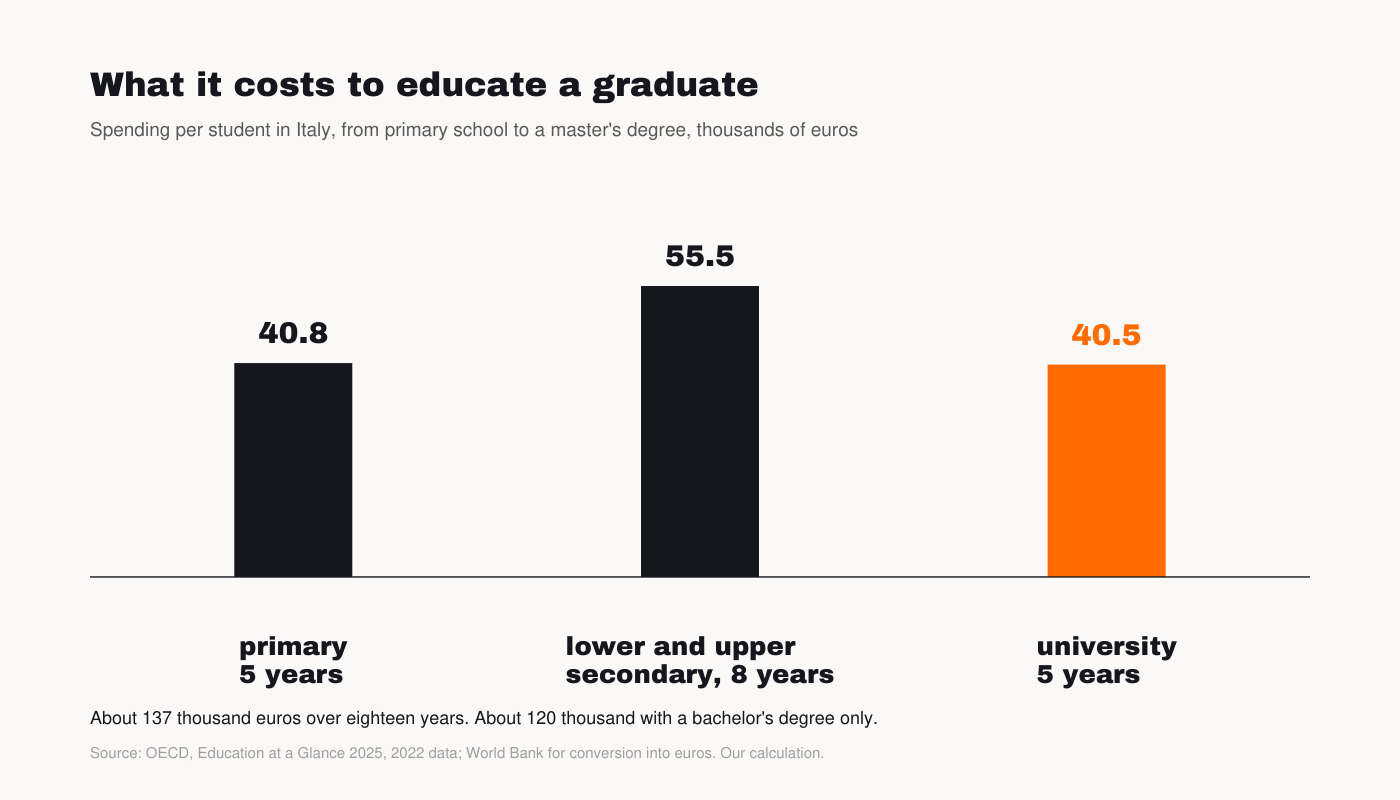
Every year the OECD measures how much each country spends on each student. For Italy, in 2022, it was 13,799 dollars a year in primary school, 11,739 in lower and upper secondary, and 13,717 at university, at purchasing power parity. I worked out the total for someone who goes from the first year of primary school to a master’s degree, eighteen years of education: converted into euros, it comes to about 137,000. With a bachelor’s degree only, about 120,000.
That is money from everyone’s taxes, and partly from families. And it is an investment, which pays off when that young person works, produces and pays taxes here.
How many we lose
According to Istat, in 2024 25,000 Italian graduates aged 25 to 34 left the country. Just over 4,000 came back. In one year the net loss is almost 21,000 young graduates.

Multiplied by what they cost, that is between 2.5 and 2.9 billion euros of education paid for here and put to work elsewhere, in twelve months. And the taxes those young people will pay for forty years will be collected by another state.
They leave because abroad they are paid more, and by a lot. According to AlmaLaurea, a year after graduating those working abroad earn 2,290 euros a month after tax, those who stayed in Italy 1,452: 57.6 per cent more.
And the ones who leave are above all the ones the market is looking for. Five years after graduating, 6.3 per cent of master’s graduates work abroad; among those who studied computer science the share rises to 11.3, and it is high among engineers and scientists too.
The figure nobody wants to read
This is usually where the brain drain story stops, with Italy training the best talent in the world and giving it away. The numbers tell a more uncomfortable story.
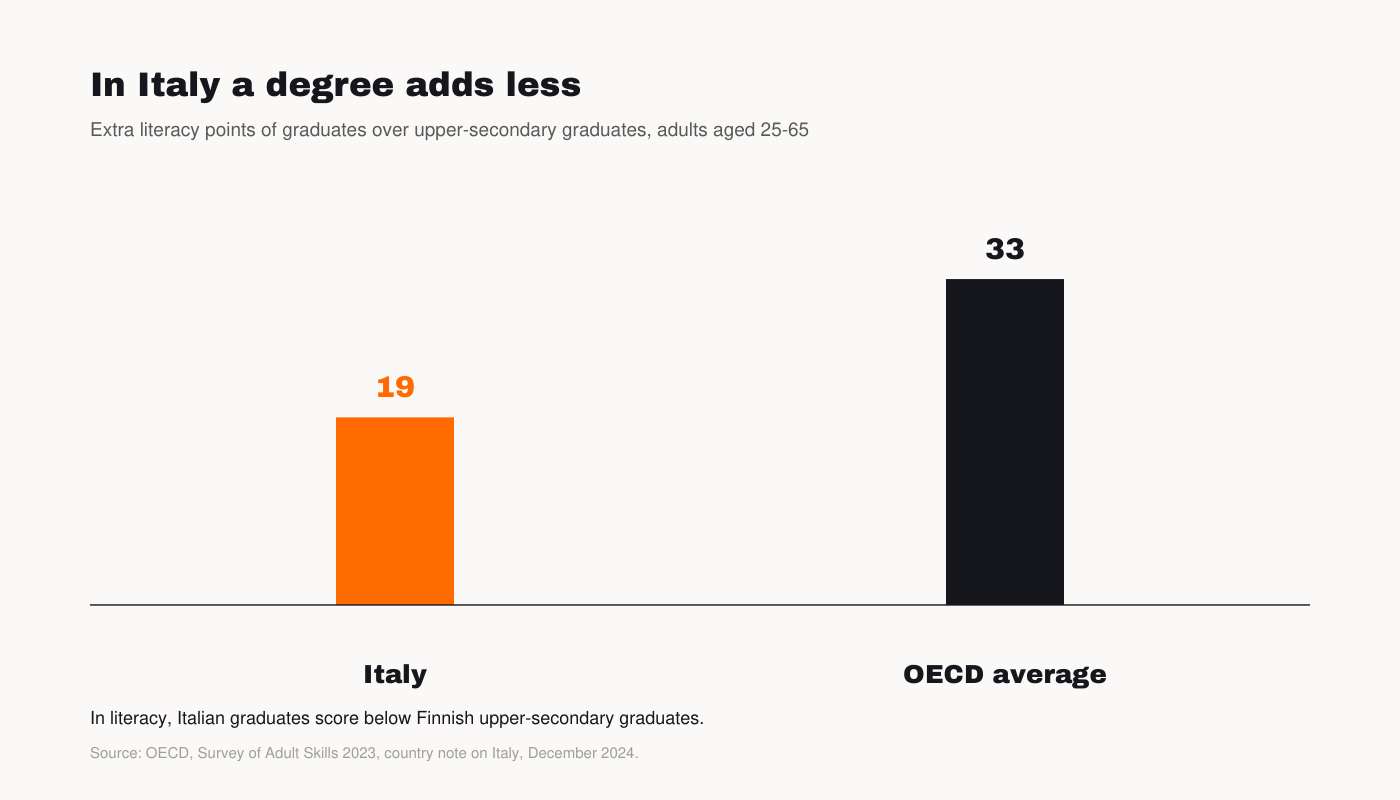
The OECD also measures what adults can actually do, with the same tests in thirty countries. In Italy a graduate scores 19 points more than an upper-secondary graduate in the literacy test. Across the OECD the gap is 33. Put bluntly: in literacy, Italian graduates score lower than Finnish upper-secondary graduates. And 40 per cent of Italian workers do a job far from what they studied.
Then there is the figure that explains the rest. In Italy pay follows the degree more than it follows skills: all else being equal, one step more of education is worth 14 per cent in wages, one step more of actual skills is worth 5.
Put together, the story is this. We train few graduates, 31.1 per cent of young people against a European average of 44.8 according to Eurostat, with low average skills, and we pay them for the piece of paper more than for what they can do. The ones who really can do things notice quickly, and go where they are paid for it. Leaving is the symptom. The illness is a labour market that rewards merit too little.
Who arrives in their place
According to the Ministry of Labour, in 2025 foreigners made up 10.7 per cent of people in work in Italy. In unskilled jobs they are 31.6 per cent, in professional ones 9.5. Businesses planned 1,359,000 hires of foreign workers, a record: almost one hire in four.
There is also a figure pointing the other way, and it has to be said because it is true. Istat reports that in 2023, 19,000 young foreign graduates came to Italy, more than the 16,000 Italian graduates lost that year. Graduates from abroad do come. But the rules call mainly for hands. In 2026 the migration quota decree opens 164,850 entries: 88,000 are seasonal jobs in agriculture and tourism, 13,600 are for home care, more than half of the total. Graduates come through another door, the EU Blue Card, which sits outside the quotas.
I see the result in the kitchen every day. We export the people who were able to study and import the people who were not.
What businesses were looking for, and could not find
In my years at the Lombardy regional government I heard the same sentence from dozens of manufacturers: I cannot find skilled workers. They were looking for people who can program a CNC machine, maintenance technicians, industrial electricians. Machines changed faster than schools, and the vocational institutes able to train those profiles have remained few, and often far from what a factory actually needs.
Today’s numbers say not much has changed. In the second half of 2025, in Unioncamere’s Excelsior survey, businesses reported that 63.7 per cent of the skilled workers they wanted to hire were hard to find. In metalworking it takes on average more than five months to find one.
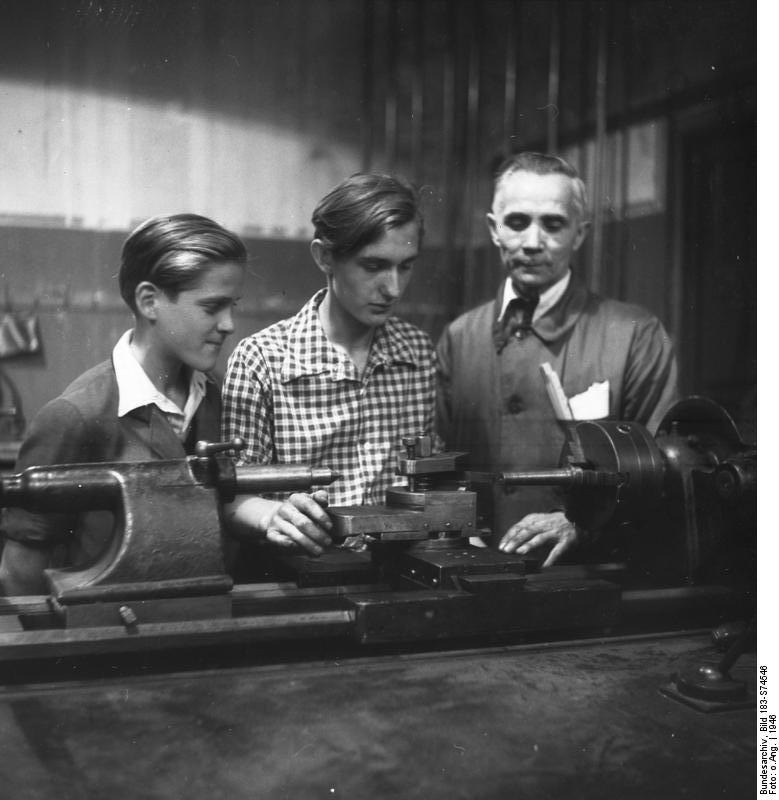
Where schooling is done together with businesses, though, it works. The ITS, the higher technical institutes built with companies, have about eight graduates in ten in work a year after their diploma, and 93 per cent of them in a job that matches what they studied. The problem is scale: in Indire’s latest monitoring there were 9,991 graduates in the whole of Italy. Fewer than the graduates who leave the country in a single year.
Where to start
The pieces of a solution already exist, and there are three.
The first is to pay people for what they can do. As long as in many contracts, and in the public sector above all, people move up by qualification and seniority, the truly good ones have only one way to be paid what they are worth: leaving.
The second is to give those who stay the tax break we now give those who come back. People returning from abroad get several years of reduced taxation, and it is a good rule, but it rewards those who left. The same break, in the first years of work, for a young graduate who stays costs something. The sum should be set against the 2.5 to 2.9 billion we lose every year.
The third is to multiply the ITS and rebuild vocational schools with businesses inside them, in the classrooms and in the workshops, because businesses know the new machines before anyone else.
In my restaurants I have watched good young people leave, and I never thought they were wrong. They were right: here their work was worth less. The question is how many more years we can afford to pay for other countries’ schooling.