
On 15 August, when nobody in Italy is reading, Il Foglio ran a piece worth going back to now. Michele Silenzi argues something counterintuitive: the society everyone calls hyper individualistic is in fact losing the very idea of the individual. Not because anyone banned it, but because an individual, in order to exist, has to be able to take risks, and we have taken risk out of the budget.
The sentence holding the argument together is that an individual, to be one, must be free, or else they are not.
That is a philosophical claim. What makes it interesting is that you can measure it.
What the numbers say
Start with the registry, because it is the least arguable figure we have.
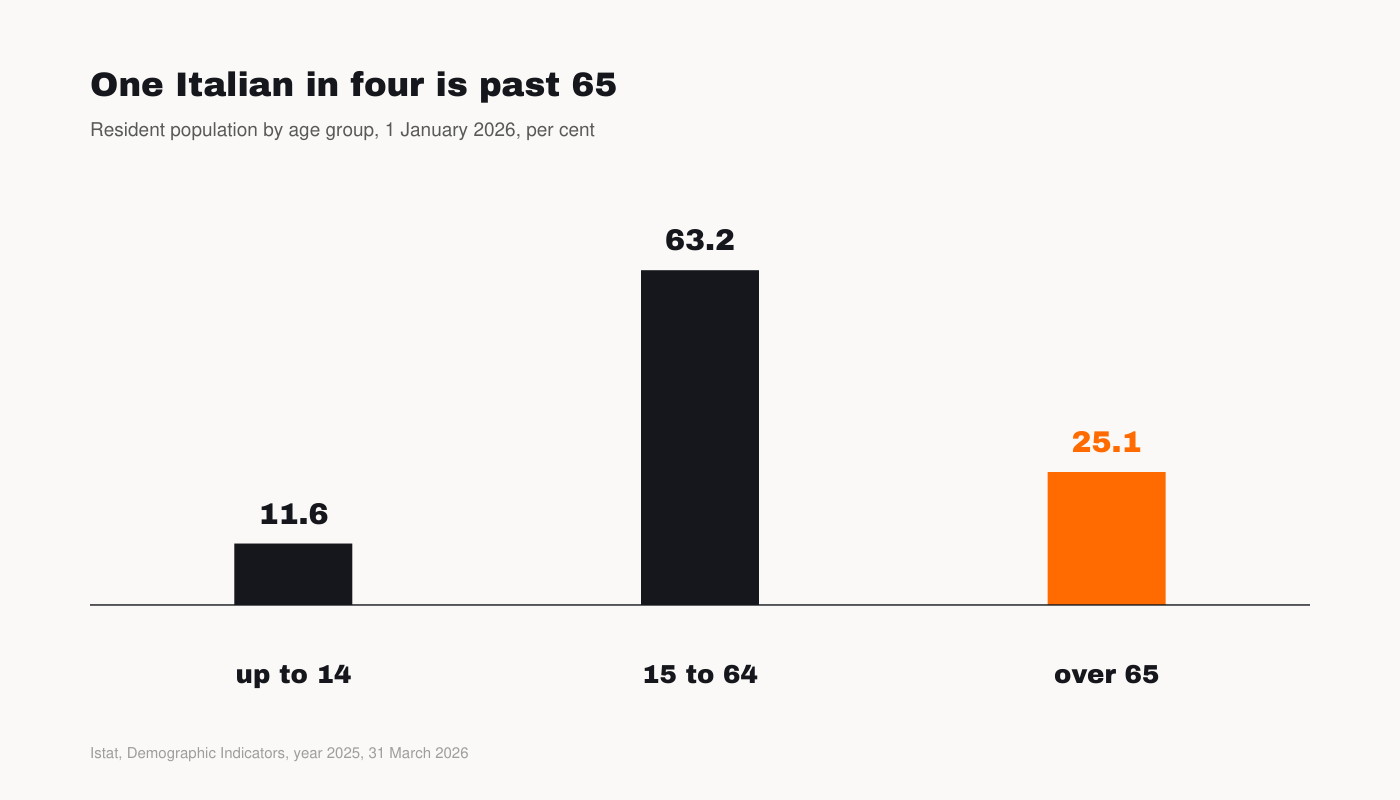
Take a hundred Italians at random. Twenty five are past 65, twelve are still at school, the other sixty three are in between and keep the place running. The average age of those hundred is forty seven. In 2025 just over one child per woman was born, 1.14, the lowest since Italy started counting, and people live to eighty two if men and almost eighty six if women.
Source: Istat, Demographic Indicators, 31 March 2026.
Those twenty five in a hundred, once past 65, live on average another twenty years. Those are two good pieces of news together, because living long is an achievement, not a misfortune. But a country built this way has a built in preference, and that preference is security. Not out of malice and not out of laziness: someone with more years behind them than ahead puts stability above everything else, and it is reasonable that they should. The problem is not what individuals choose. It is that the preference becomes everybody’s climate, and trickles down the age scale to young people who have no biological reason to be afraid.
Then comes the second figure, which shows the same thing from the accounting side.
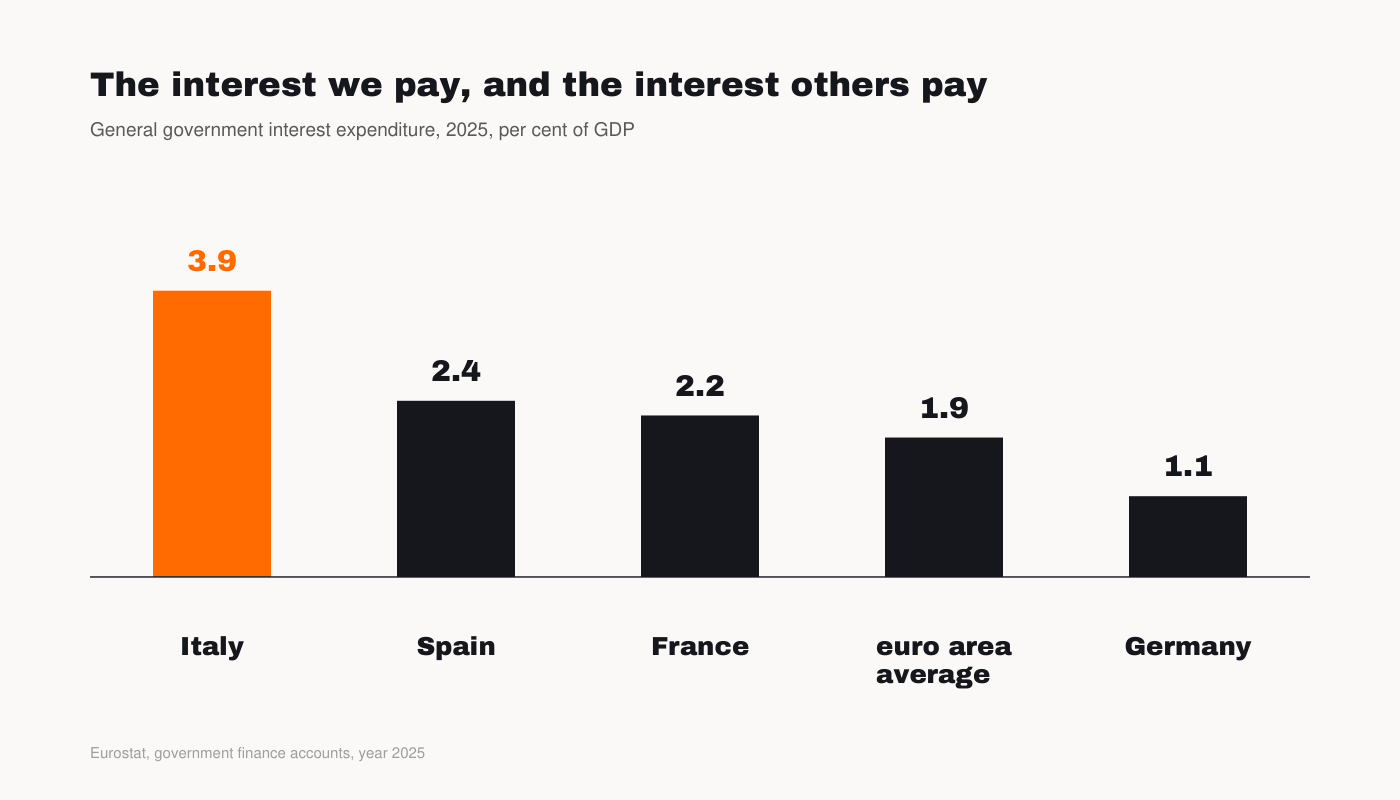
At the end of 2025 Italian public debt stands at 137 per cent of what the country produces in a year. The interest on that debt, what we pay every year simply for having it, cost 3.9 per cent of gross domestic product: the highest in the euro area. Spain is at 2.4, France at 2.2, Germany at 1.1. Sources: Osservatorio sui conti pubblici italiani, 6 March 2026, and Eurostat, 2025.
3.9 per cent sounds like nothing until you look at where it goes. It leaves the budget before anyone has decided anything. It buys no hospital, pays no teacher, funds no research. It keeps the lights on.
How the two connect
An ageing country asks for security. An indebted country cannot afford to say no. So the promise is met through current spending, current spending is covered by debt and taxation, and debt costs interest, which shrinks the room for everything else. The circle closes, and inside it there is nobody’s malice: there is a series of decisions, each reasonable on its own, which added together produce paralysis.
That security comes with an invoice, and the invoice has a figure. Italy spends 15.5 per cent of what it produces each year on pensions, against a European average of 12.3: three points of difference, almost seventy billion euros a year. Source: Eurostat, 2023. The reforms did work, the share had fallen to 15.1 per cent in 2017, but the peak is still ahead: the State Accounting Office puts it at 17.1 per cent in 2039, with the decline to 13.7 arriving only in 2070. The bill comes before the relief, and whoever pays in today crosses the worst fifteen years in full.
This is not an argument against people who draw a pension: they paid in for forty years, and that was the deal. It is an argument about where the money goes. Seventy billion a year is almost two and a half times everything Italy spends on research and development, public and private together, which comes to 1.37 per cent of output. A country can keep the promises it made and at the same time check who is drawing without being entitled to, and it can reopen the question of the retirement age instead of pretending that 2039 will not arrive. Because a country that does not grow ends up paying no pensions at all.
This is the point where nostalgia usually shows up. Things were better when they were worse, people in the Sixties wanted to build, today they do not.
The numbers say otherwise. Sixty years ago people died earlier, earned far less, worked in conditions that would now be illegal, and personal safety was no better than today. We were not braver. We were poor and young, and when you are poor and young risk is not a philosophical choice, it is the situation you are in. You had nothing to defend, so you took chances.
Today we have a great deal to defend. That is the result of sixty years of work done well, and there is nothing to be ashamed of in it. Except that defence, once it becomes the only thing you know how to do, is called paralysis.
Nostalgia, in this picture, is not memory. It is fear of the future dressed up as remembering. And whoever is selling it is almost always asking us to stand still.
What remains open
The link between mean age and appetite for risk is plausible and documented, but it is not a law of physics. Japan is older than we are and keeps doing things. So demography explains the pressure, not the destiny, and anyone claiming we are doomed by the registry is using a statistic to avoid taking responsibility.
I do not have a three point recipe, and anyone offering you one is having you on. A direction, though, I do have.
Taking a risk in Italy today carries a price that is not only financial. It is time. Start a business and you discover that part of every month goes on obligations that exist because nobody deleted them, on data the state asks you for although it already holds it, on permits routed through three offices that do not talk to each other. None of it is designed to stop you. All of it together stops you.
That is why red tape is not a technical subject for insiders. It is the concrete way a country tells its citizens whether taking a risk is worth it. And a country that needs people willing to take risks, because its average age is forty seven and 3.9 per cent of what it produces is already committed to interest, might at the very least stop making risk expensive with its own hands.
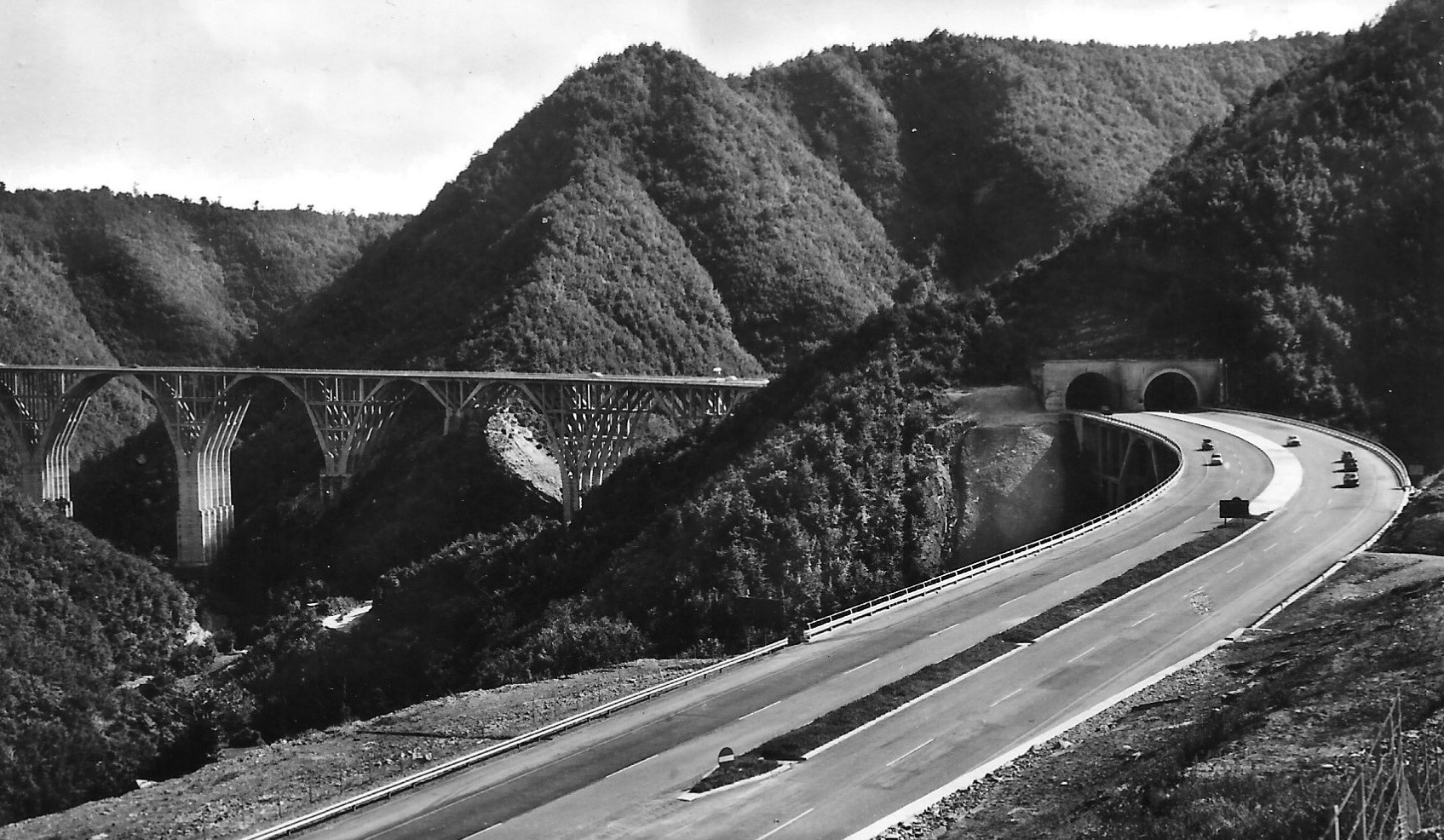
What we miss is not the past. It is being allowed to try without paying a toll at every corner.