
In 2025 a home in Milan costs on average five and a half thousand euros a square metre. In the Alto Milanese, which sits inside the same metropolitan area and lies forty kilometres away, it costs a little over fifteen hundred. Three and a half times less, for forty minutes of road.
So far this is the photograph we all know, and have been arguing about for years. What almost nobody looks at is something else: how the two prices move. Over the last year Milan rose by almost seven points, the Alto Milanese by one and a half. Which means the gap is not closing. It is widening, and it widens every year that passes.
Let me start with the thing that costs me most to say, because if I do not say it first the rest does not hold up.
The price of housing in Milan is not a scandal. It is the price of being wanted, and it is proof that people want to come here. Over ten years, going by the index Istat builds on the prices actually paid in front of a notary, Milan has risen by more than seventy points. Italy, over the same decade, by sixteen. Turin by eleven, Rome by nine. Four and a half times the national average. And yes, there are Italian cities where a house costs almost nothing: they are the ones losing inhabitants, and that is not a fortune I would wish on anyone.
I know exactly how this sounds, and I know who will say it. Someone who is thirty, earns sixteen hundred euros and cannot afford to live alone will answer that I am speaking as a man who already owns a home. They are right to say it, and I have no intention of consoling them. Saying that a high price is a good sign for the city is not an answer to the person left outside: it only tells you where to intervene, and where intervening is pointless. Because anyone promising to bring prices down in Milan is promising something that has never worked in any city people want to live in. Widening the city, on the other hand, can offer a home forty minutes away instead of ninety. Two different promises, and only one of them can be kept.
And the bill for those left outside can be worked out, and it is merciless. The Politecnico’s Affordable Housing Observatory asked how many square metres someone can buy in Milan while putting thirty per cent of their net salary into the mortgage. For a manual worker it comes to sixteen, for a clerk twenty-two. Not flats: square metres. And over ten years, for the lowest grades, that surface has shrunk by more than a quarter.
Rents are worse. According to the CNA, an ordinary flat in Milan swallows almost three quarters of a net salary, the highest figure in Italy. Since 2019 rents have risen by almost half, salaries by a tenth.
There is a blunter way of saying the same thing, which is to ask how many years of income it takes to pay for a home. In Italy, over the last ten years, that number has fallen: from a little over eight years to a little over six. In Milan it has risen, from just under ten to just over ten. The country is going one way, this city is going the other.
The problem is not the price, it is that supply does not move
If we accept that the price is a symptom, the question becomes: a symptom of what.
The answer came from the Bank of Italy six years ago, and it is one of the few times Italian economic research has looked at our own cities. In 2020 a group of the Bank’s researchers went to see, town by town, how quickly new homes appear when demand grows. Where they do not appear, the extra jobs do not turn into people working. They turn into the price of a square metre.
That is exactly the diagnosis of Milan, and it was not written by a partisan think tank: it was written by the central bank.
Here is the strongest point of those who disagree with me, and liberal pieces usually skip it. The cities held up as models do not only have a metro: they also have a public housing stock. But the comparison has to be city against city, and with the right numbers, because the ones in circulation are wrong in both directions.
The first is the one used to accuse Milan, and it is always quoted like this: Italy has less than three per cent public housing, against a European average of around eight. The figure is true. And it has nothing to do with this city.
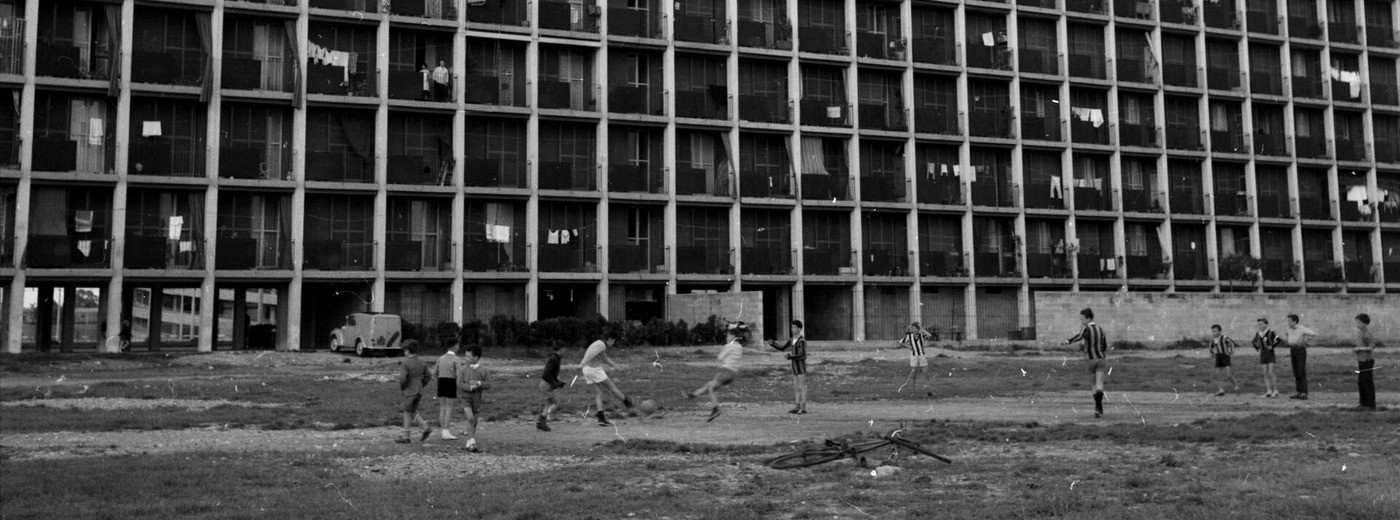
Aler Milano alone holds more than seventy thousand property units, over forty thousand inside the municipality and almost thirty thousand in the rest of the province. MM manages another thirty thousand or so on the municipality’s behalf. Together that makes almost a hundred thousand public homes on one territory.
Inside the municipality, the census says one occupied home in eleven belongs to the public hand. Counting the twelve thousand empty units as well, it becomes almost one in eight. Three times the Italian average. Anyone quoting the national figure to talk about Milan is talking about a different city.
The second wrong number is the one used to defend it, and it is the first one turned upside down. One home in eleven is a lot for Italy and is not a lot for Europe. In Paris social housing is almost one in four of all main residences. In London it is around eight hundred thousand out of three million seven hundred thousand, a little over one in five. Vienna, the continent’s outer limit, is above forty per cent. Milan, however much better off it is than the country it sits in, does not reach half of Paris or of London.
Madrid, on the other hand, should be struck off the list. And striking it off is the most interesting thing in the whole argument.
Spain sits at the bottom of the OECD table, between one and two and a half per cent social housing. Madrid’s municipal housing company owns a little over nine thousand units, and note this: that is the largest public rental stock in the whole of Spain. Milan, with a population two and a half times smaller, has six times as many.
And yet Madrid has two hundred and seventy kilometres of metro, and a single authority governing transport for seven million people.
Which is precisely the point of this piece. The network and public housing are two different levers, and Madrid shows the first can be pulled without having the second. Anyone saying “let us do what London and Paris did” while thinking only about rails is quoting two cities that also did everything else. But anyone answering that nothing can be done without social housing has to explain Madrid.
That said, Italy has had a rent moderation policy for almost thirty years, the negotiated rent introduced by the 1998 law. And no public evaluation of its effect exists. None. Anyone saying rent control does not work is saying it without Italian data, and so is anyone saying the opposite.
The most complete international review there is, two hundred studies over sixty years, says something subtler than the slogan: a rent ceiling protects those already inside, and in fourteen cases out of seventeen pushes up rents in the unregulated segment. It is not that it does not work. It is that it shifts the cost onto those who have not got in yet. Which is to say, onto the people we are talking about.
There is however one case that answers the question, and it is not theory. In 2016 Auckland changed the rules on three quarters of residential land: it removed minimum plot sizes and raised the ceiling on how much can be built. Eight years later rents sit almost a quarter below the level they would have reached without that reform, and it is not a count made on listings: it is made on tenancy bonds, that is on rents actually paid. Along with it came almost twenty-two thousand additional homes consented. The study is by Greenaway-McGrevy and So, published in Economic Inquiry. They did not cap anything: they took the constraints off the people who wanted to build.
In Auckland, though, the land to free up was inside the city. Inside the municipality of Milan that land is almost gone, and where it still exists it is in the hundred and thirty-two towns around. There the building permit alone is not enough, because a home forty kilometres out is worth something only if you can get there in forty minutes.
The missing piece
So the road is to widen the city: to make the hinterland a place where you can live while working in Milan. And here we come to the part this piece exists for, because the real constraint is not how much gets spent. It is who decides and who collects. Both are institutional questions, and both are written down in black and white in the law.
Every morning almost three hundred and eighty-five thousand people come into Milan to work, and it is Istat saying so, not an interested estimate. More than two hundred thousand of them arrive from one of the other hundred and thirty-two towns of the metropolitan area: they are already inside the territory, they are simply not inside the municipality.
That figure, though, counts only those who work, and only those registered as resident somewhere. There is a second measure, which Istat calls the insisting population and which also counts the students and the out-of-towners who live in Milan but are on another town’s register: by that measure the city reaches two million one hundred and seventy thousand people during the day. The two figures do not add up, because the first is a flow and the second is a photograph. But they lead to the same place: for every ten Milanese there are another six people who do not live in Milan, and over four years that ratio has grown rather than fallen.
There is then one number that says exactly where the system breaks. Take the journeys that begin and end inside Milan: fifty-seven out of a hundred by public transport, thirty by car.
Now take the ones that cross the boundary. The car climbs to fifty-nine, public transport falls to thirty-seven. The two numbers swap places.
And they do not swap gradually as you move away from the Duomo, as you might expect. They swap at the exact point where the municipality ends. These are the figures of the Sustainable Urban Mobility Plan, that is to say the municipality’s own, and they say the administrative boundary is not a line on a map. It is the place where the network stops working.
Now let us look at who governs transport in this area.
In London there is one body. The Greater London Authority Act of 1999, section 154, establishes Transport for London; section 155 gives the mayor the power to issue directions to it, including a direction not to exercise a power; schedule 10 states that every member of the board is appointed by the mayor and that the mayor can remove them. Nine million inhabitants, one cockpit, one name on the door.
In Paris there is one body. The Code des transports, articles L1241-1 onwards, says the Île-de-France region alone holds the majority of the seats, that the president of the regional council chairs it, and it uses a phrase we do not have in Italian: the authority arrête la politique tarifaire, it sets fare policy. Full stop, no sharing. Twelve and a half million inhabitants.
In Madrid there is one body, with an exception the consortium itself declares in its own accounts: on the Cercanías, the state-owned suburban trains, it has no competence. Seven million inhabitants, and a hole admitted in writing.
In Milan there is none. The local public transport agency for the Milan, Monza, Lodi and Pavia basin has thirteen shareholders. The municipality of Milan holds forty per cent of it, the metropolitan city a little over four. And there is one sentence, in article 6 paragraph 2 of the 2012 Lombardy regional law, that is worth all the rest of this piece: the agency decides who runs the services, except those running on rails inside the regional capital, even for part of the route. Those are decided by the capital, which is to say by Milan.
Metro and tram run on rails. So the basin authority is born forbidden to deal with the largest piece of the basin.
The agency itself states the result: twenty service contracts with eight operators in its territory, plus twenty-three contracts held by the non-capital towns. Forty-three. To which must be added the contract between ATM and the municipality of Milan, and the one between the Lombardy region and Trenord for the railway. Forty-five contracts where London has a handful inside a single body.
And the main contract, the one between the municipality and ATM, started on 1 May 2010 and was due to end in 2017. A law extended it to 31 December 2026. Sixteen years and eight months with the same operator, without putting anything back out to tender. The new tender, the one issued in May for a billion and a quarter, runs for seven years.
Milan asks Rome for what it will not grant Melzo
Here, though, comes the part that concerns us, otherwise this piece turns into a complaint against the state and nothing more.
The Delrio law assigns the metropolitan city the fundamental function of mobility across a hundred and thirty-three towns. But the body that actually plans that transport, awards it and sets its fares is the basin agency, where the metropolitan city weighs four per cent and the municipality of Milan forty.
So Milan asks Rome for powers it will not itself grant the metropolitan area. An autonomist has to write that sentence, otherwise he is defending his own parish and calling it subsidiarity. Whoever decides close by decides sooner, but he also has to let those closer than him decide. And he has to pay locally, or the word autonomy is simply covering a request for money.
The mayor nobody votes for
Now the part that anyone working in this field knows perfectly well, and which for that very reason no longer makes news. That is the trouble with uncomfortable facts that grow old: they stop causing outrage before they are fixed.
The Delrio law, number 56 of 2014, says seven words in paragraph 19: the metropolitan mayor is by right the mayor of the capital municipality. Which means that whoever governs a territory of three million two hundred and fifty thousand people is elected by one million three hundred thousand. Almost one million nine hundred thousand citizens do not vote for the person deciding the land planning and the mobility of the place where they live.
And it is not Milan’s fault. The statute of the metropolitan city of Milan, approved on 22 December 2014, says one sentence in article 20: the metropolitan mayor is elected by universal suffrage. Article 24 says the same of the council. Article 61 lists the conditions: the homogeneous zones, done in September 2015, and the capital’s own areas endowed with administrative autonomy, the municipi, set up in 2016.
Milan wrote direct election into its own statute twelve years ago and did the homework that fell to it. The last piece is missing, and it does not depend on the city: it takes a state electoral law that no parliament has ever passed, across three legislatures, despite the bills tabled every time.
The Constitutional Court came close. In 2021 a voter from the metropolitan city of Catania brought a case. The Court rejected it on a procedural defect, but in doing so wrote something heavy: a metropolitan mayor nobody elects does not sit within the Constitution. It does not hold on the equality of the vote and it does not hold on the duty to answer to the electorate. And it asked Parliament to redo the law. Five years ago.
Meanwhile, on 29 April 2026, the Chamber approved at first reading a constitutional law making Rome Capital a constituent body of the Republic with legislative power over local public transport. For Rome yes. For Milan no.
There is a final detail that closes the picture better than any argument. The extension of the M5 to Monza is financed with nine hundred and fifteen million from the state and two hundred and eighty-three from the region. The work leaves the municipal boundaries, crosses Sesto San Giovanni and Cinisello Balsamo and arrives in another province. The agreement with the ministry is signed by the ministry, the region and the municipality of Milan. The metropolitan city, which on paper holds the fundamental function of mobility, is not a party to it.
Sixteen years for two kilometres. The extension of the M1 from Sesto to Monza Bettola began in 2010. It is barely two kilometres and two stations. Work stopped in 2019 and in August 2026 the line is not running. Over the same span of time, between 1995 and 2003, Madrid built a hundred and thirty-one kilometres of metro and seventy-six stations: fifty-six in the first four years, seventy-five in the next four. Not by spending more per kilometre than we do. With a single authority that decided.
And money is not the problem it looks like
So far the question has been who decides. There is a second one, usually told as a shortage of resources when it is not: Milan already has some of the money, and does not use it. A Milanese firm paying property tax on its own warehouse hands over a little more than one per cent of the cadastral value, and of that sum two thirds go to the state and one third stays with the municipality. The national fund for public transport puts up five billion three hundred million for all the regions together, and it is Rome that divides it. In Île-de-France a single local tax, the one paid by employers with more than eleven staff, brings in more than six billion on its own.
Except that Italy has a similar instrument, and it has been in force for twenty years. It is called the purpose tax. The city council decides it with a regulation of its own, without asking anyone for anything. And in the list of works it can pay for, the law puts urban public transport in first place.
It is worth up to half a point per thousand on the property tax base, for ten years, and after the 2011 reform it can cover the entire cost of the work. If the site does not open within two years of the executive design, the municipality gives the money back.
Twenty-five towns out of eight thousand have introduced it. Never a large city. Never for public transport.
There is still the other half, and it is not obvious the state should provide it: a work of this kind creates value, and the value it creates can in part be taken back.
How it is done
Four things. None costs a euro of current spending, and the first one Milan can do on its own, tomorrow morning, without asking anyone for anything.
One. The Milan city council introduces the purpose tax on the metro extension. No state law is needed, no agreement with the region: a municipal regulation is needed, under a law in force since 2006.
On the property tax the municipality collects today, half a point per thousand makes between thirty and forty million a year. Between three hundred and four hundred over ten years. The M3 extension towards Peschiera costs seven hundred and seventy, and has no funding.
Milan does not pay for it alone: it pays for half of it. And half changes the conversation. A city asking for resources without having used its own is easy to turn down. A city putting its own money on the table and asking the state for the other half is hard to send away.
Two. The Lombardy region deletes the exception that keeps Milan outside the basin authority, article 6 paragraph 2 letter c of regional law 6 of 2012, and hands the agency all the area’s transport, suburban trains included. In the same resolution it raises the metropolitan city’s shares until they weigh as much as the task the law has already given it. Cost: zero. Effect: from forty-five contracts to one.
Three. Parliament does not wait for constitutional reform, because it already has the tool. Paragraph 46 of the Delrio law says the state and the regions may assign further functions to metropolitan cities. It has been in force for twelve years. It does not require a constitutional law, a referendum or special majorities. There are five bills on a special law for Milan sitting in the chambers and not one has begun examination. And let it finally pass the electoral law for metropolitan cities, the one missing since 2014 and urged by the Constitutional Court in 2021: it is an ordinary law, and it costs nothing.
Four. The municipality writes its tenders so as to take back part of the value the work creates. The Elizabeth line cost London something like twenty-four billion dollars. Property within a kilometre of the stations gained almost twenty-seven: more than the work cost. London took back over five billion of that gain, by adding a supplement to the tax businesses pay and by selling the right to build above the stations. Paris does the same, through a public company developing the land bought for the Grand Paris Express.
On this last point the uncomfortable part has to be said too. In Île-de-France the notaries tracked prices around the seventy future Grand Paris Express stations for more than ten years. Near and far rose together, with the same gap as always: thirteen years of announcements moved nothing.
And the study Transport for London commissioned on the Elizabeth line, comparing served areas with similar areas left without, finds two points of increase within five hundred metres of the stations and two points of decline in the band between one and two kilometres. Part of what looks like value creation is value moving from one neighbourhood to another.
Which brings us straight back to Auckland. Bringing the metro into the hinterland does not, on its own, create homes: it makes the existing ones reachable, and hands the ground rent to whoever owns the land where the metro arrives. The rail on its own moves the problem twenty kilometres and delivers it to the owners in Gorgonzola instead of the owners in Porta Romana. Together with the right to build, it reaches the person paying the rent.
And the gap we started from, the one between five and a half thousand euros a square metre and fifteen hundred, does not close with a cap. It closes the day those forty kilometres cost forty minutes to anyone, and not only to those with a car.
So the question that closes this piece is not what a home costs in Milan. It is why a city producing forty-two billion in declared income, hosting almost a million people a day who do not live there, and which wrote into its own statute twelve years ago that it wanted to be elected by everyone, is still governed as though it ended at the ring road.